
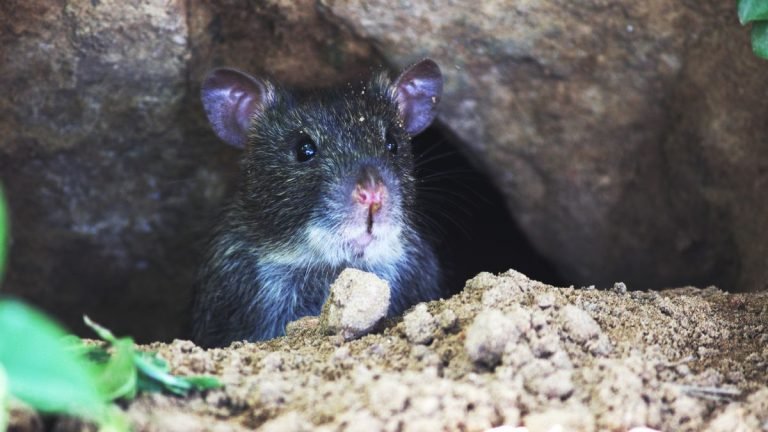

Scratching in the attic of a Dove Canyon home. A nest of sticks and leaves in the corner of a Trabuco Highlands garage. Rats running the back wall toward the canyon. Our rodent control in Rancho Santa Margarita traps rodents moving in from the foothills and seals the gaps that let them inside.
Serving Dove Canyon, Trabuco Highlands, Robinson Ranch, Walden, Rancho Cielo and the rest of RSM.
Homes along the foothills and canyons often show these signs first:
In Orange County’s foothill and oak areas, native woodrats (often called pack rats) build nests out of sticks, leaves and debris. They sometimes move into garages, sheds and under decks next to open space. Trapping and sealing ground-level gaps keeps them out.
We don’t recommend it. Hawks, owls, bobcats and coyotes that eat poisoned rodents can be harmed, and most anticoagulant baits are restricted in California. Traps and sealing work without that risk.
When the canyons turn cool and wet, rodents living in the brush look for dry shelter. Homes along the edge of open space are the closest option, so activity often picks up in late fall and winter.
Roof rats climb into attics, Norway rats stay low around foundations, and native woodrats build stick nests in garages and sheds. Each one gets in differently, so the inspection identifies which you have before we set a plan.
In dry months, water is hard to find in the hills. Rats chew drip lines, hoses and sprinkler tubing to drink, which often means they’re living close to the house.
Larger lots with slope plantings, woodpiles and dense shrubs give rodents more cover near the house. Clearing debris and trimming plants back from walls helps a lot.
Rancho Santa Margarita became Orange County’s 33rd city in 2000, but neighborhoods like Dove Canyon, Trabuco Highlands, Robinson Ranch, Walden and Rancho Cielo were built before that. Many sit close to the foothills, with open slopes and canyons not far past the back fence.
Close by, O’Neill Regional Park covers about 4,500 acres of Trabuco and Live Oak Canyons, where Tijeras Canyon Creek joins Trabuco Creek. Farther out, the Cleveland National Forest lies to the northeast. That much open space means rodents and the animals that hunt them live close to homes year-round.
How It Works
Homes next to open space need extra attention at ground level, so every inspection includes the garage, sheds, decks and slope side.
| Factor | Why it matters |
|---|---|
| Type of rodent | Roof rats, Norway rats, woodrats and mice each need a different setup |
| Number of entry points | Each gap at the roof, garage and foundation has to be sealed |
| Outbuildings and decks | Sheds, decks and detached garages add places to check and seal |
| Cleanup needs | Nests, soiled insulation or debris add to the scope |
Areas We Serve
We cover every Rancho Santa Margarita neighborhood, from the gated streets of Dove Canyon to the homes along the foothills, plus Mission Viejo and the cities around it.
Yes. We cover Dove Canyon, Trabuco Highlands, Robinson Ranch, Walden, Rancho Cielo and every other part of RSM. For gated neighborhoods, let us know about access when you book.
Woodrats, often called pack rats, are native rodents that live in brushy and oak areas and build nests from sticks and debris. They can move into garages and sheds near open space. They’re trapped and excluded much like other rats, with extra attention to ground-level gaps.
Open space holds a lot of rodents, and homes along its edge are the nearest shelter, especially in cool, wet weather. Sealing the house and clearing cover near the walls makes it far less attractive.
Most homes need a few visits over one to three weeks: inspection and trap setup, trap checks, then sealing once activity stops. Homes with sheds or decks can take a little longer to finish.
No. Poisoned rodents can harm hawks, owls, bobcats, coyotes and pets that eat them, and most anticoagulant baits are restricted in California. We use traps and sealing instead.
Yes. We find the nest, set covered traps away from food, kids and pets, and seal the small gaps mice use around garage doors, pipes and vents. See Mouse Control. Signs to look for are in our guide to mice in the house.
We’ll find how they’re getting in from the yard or the roof, trap them and seal the gaps.